Ernst Haeckel’s Jellyfish
Ernst Haeckel’s Jellyfish
Artist
Ernst Haeckel
Ernst Haeckel
Date
February 23, 1881
February 23, 1881
Medium
Printed on high-quality wove paper
Printed on high-quality wove paper
Dimensions
29 × 38 cm
29 × 38 cm
Artworks & Descriptions
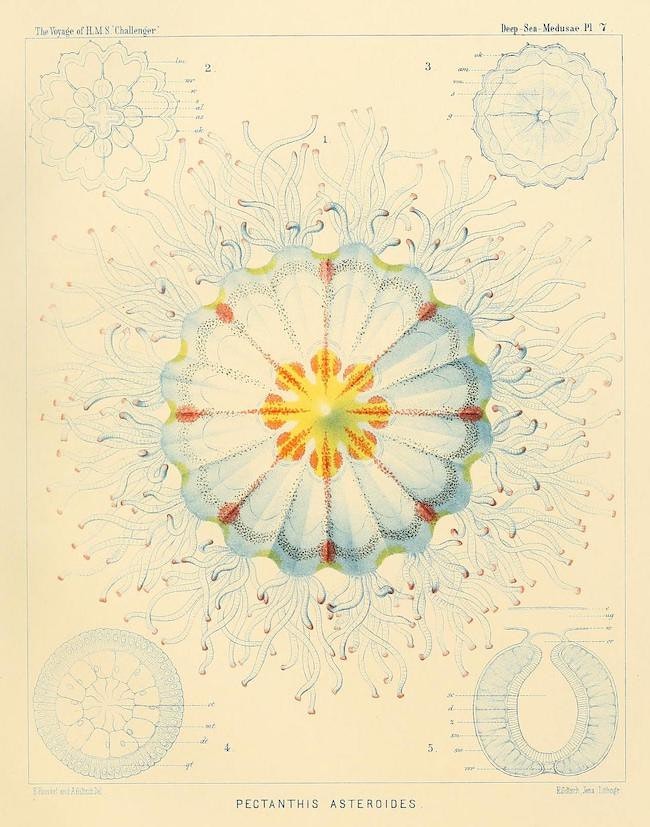
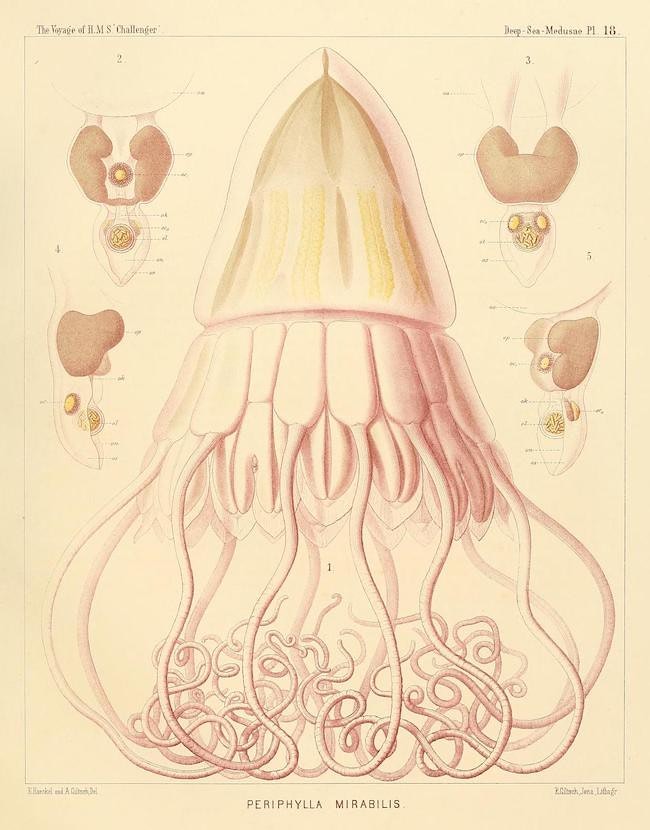
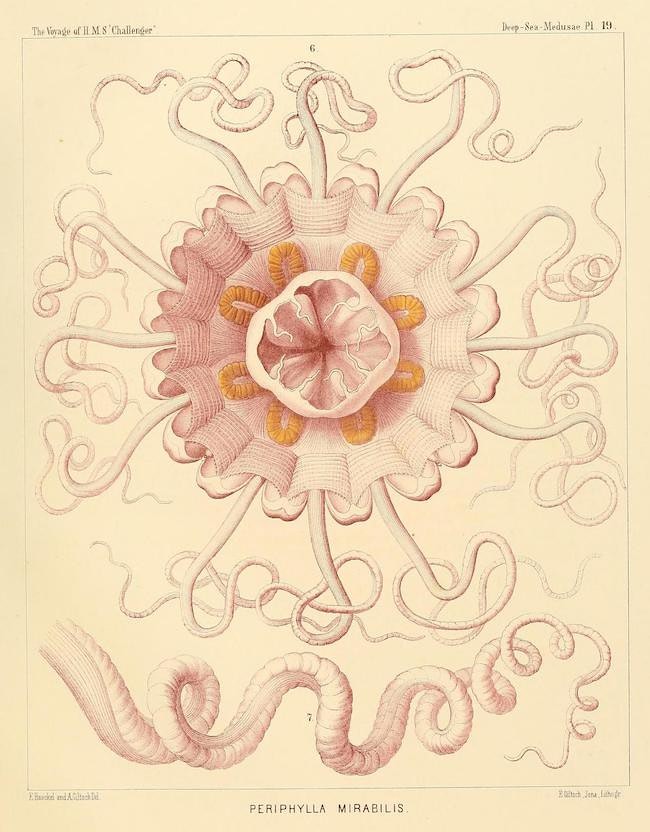
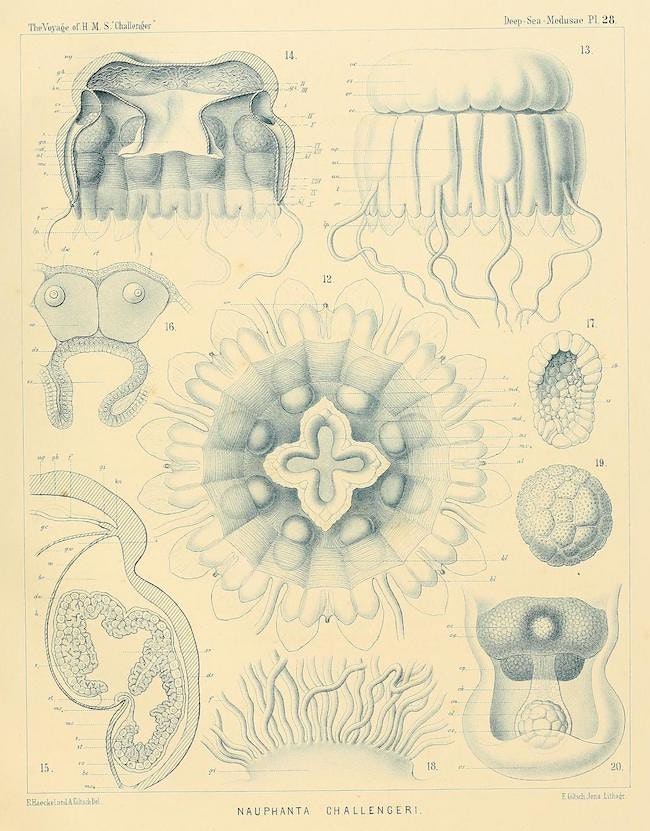
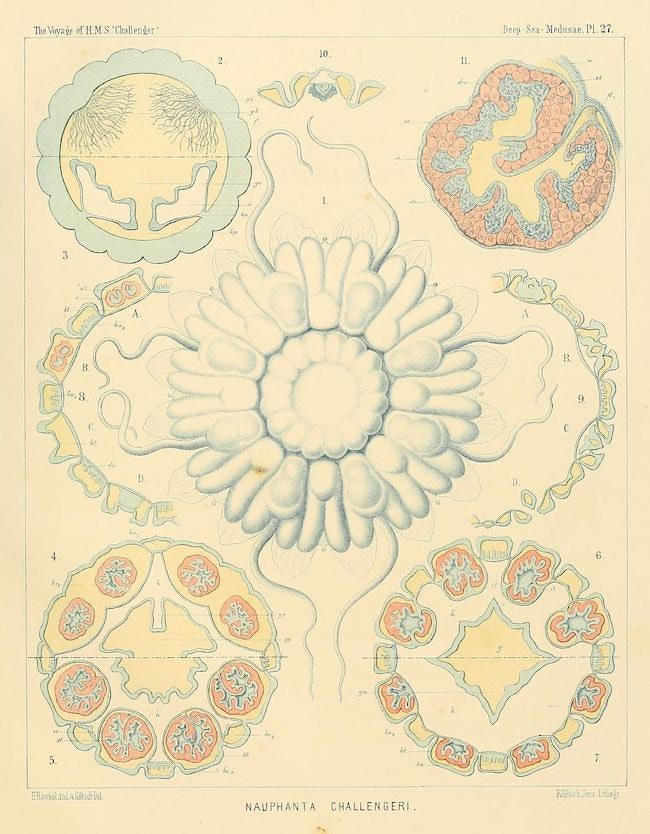
Ernst Haeckel, a German biologist, was captivated by medusae (jellyfish), seeing in them the fragile yet exuberant beauty of nature. His fascination with these creatures deepened after the tragic death of his fiancée, Anna Sethe, in 1862. Haeckel, devastated by her passing, found solace in the grace of a medusa he observed in a rock pool during a trip to Nice. He named it Mitrocoma Annae in her memory.
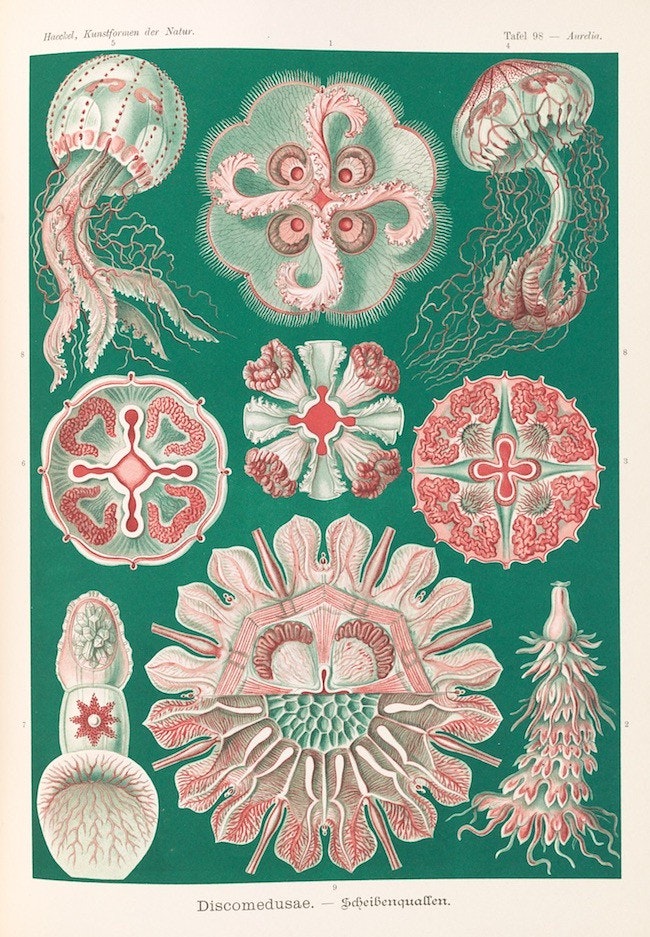
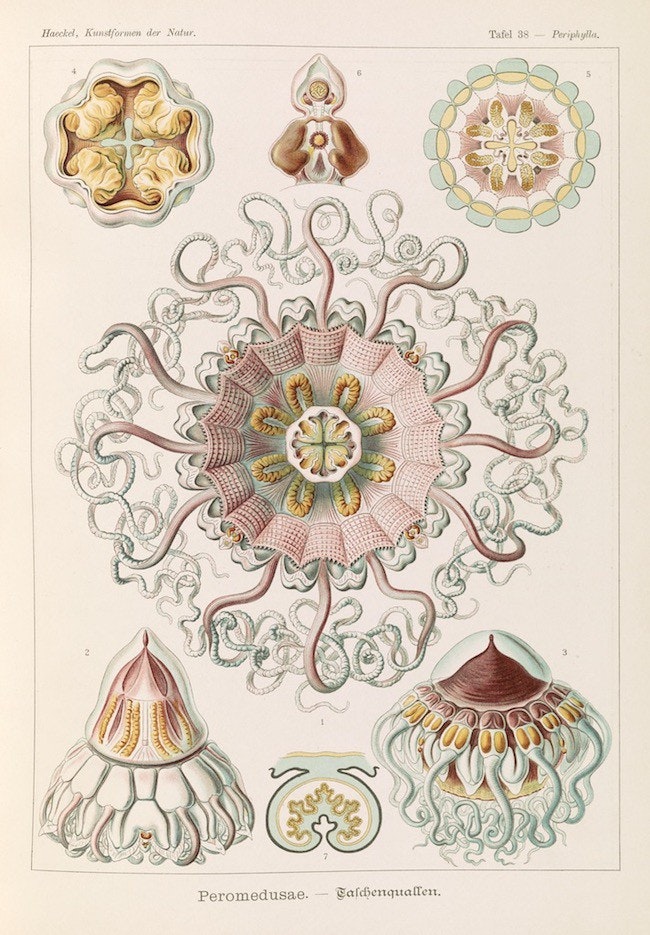
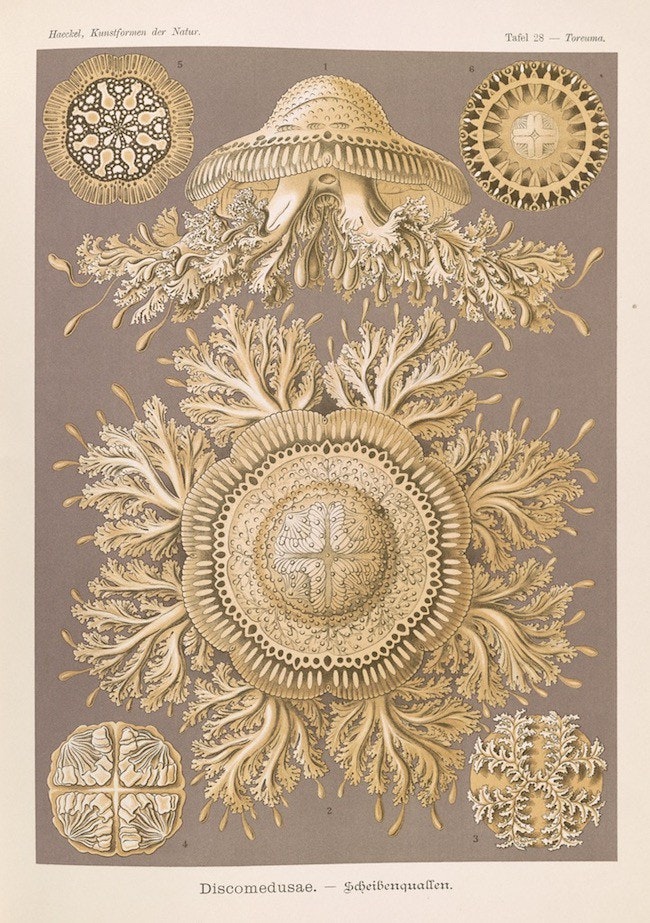
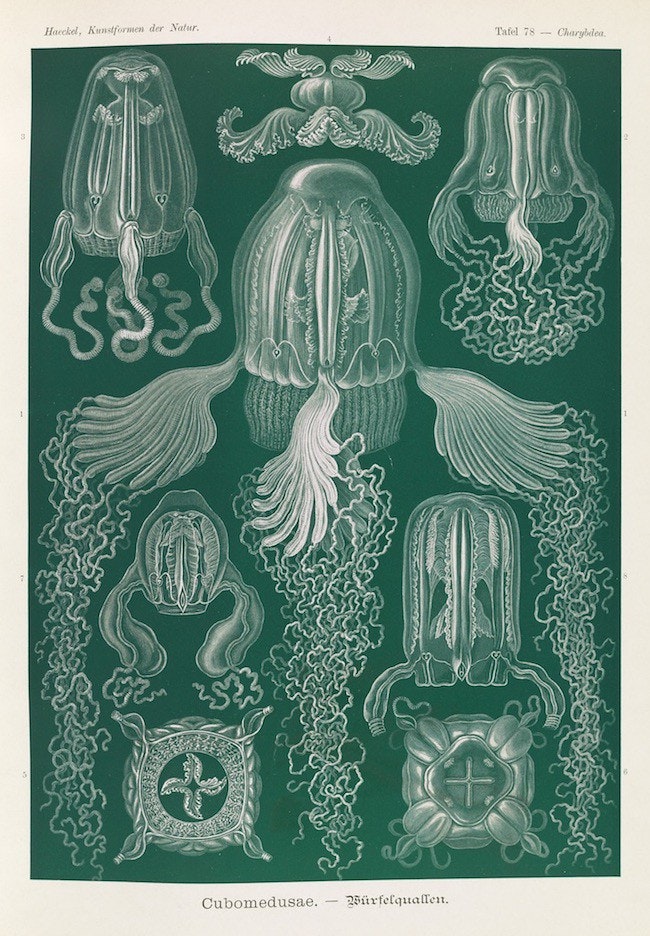
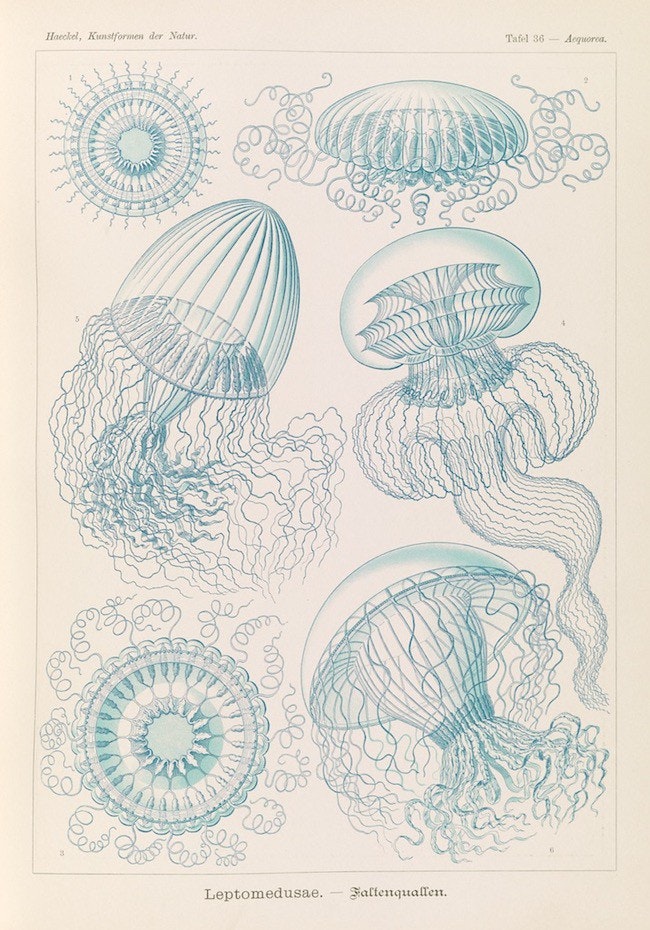
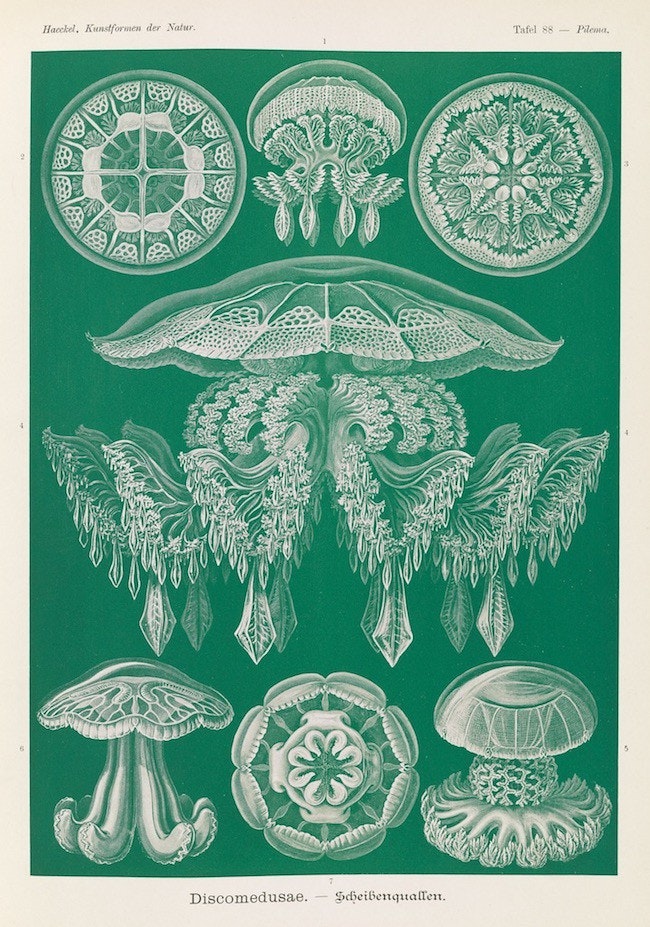
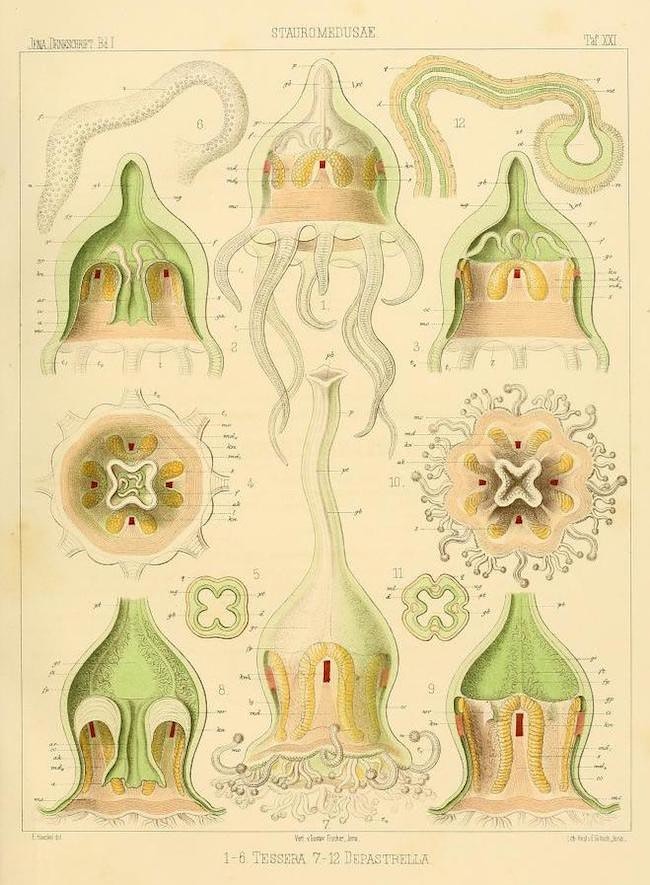
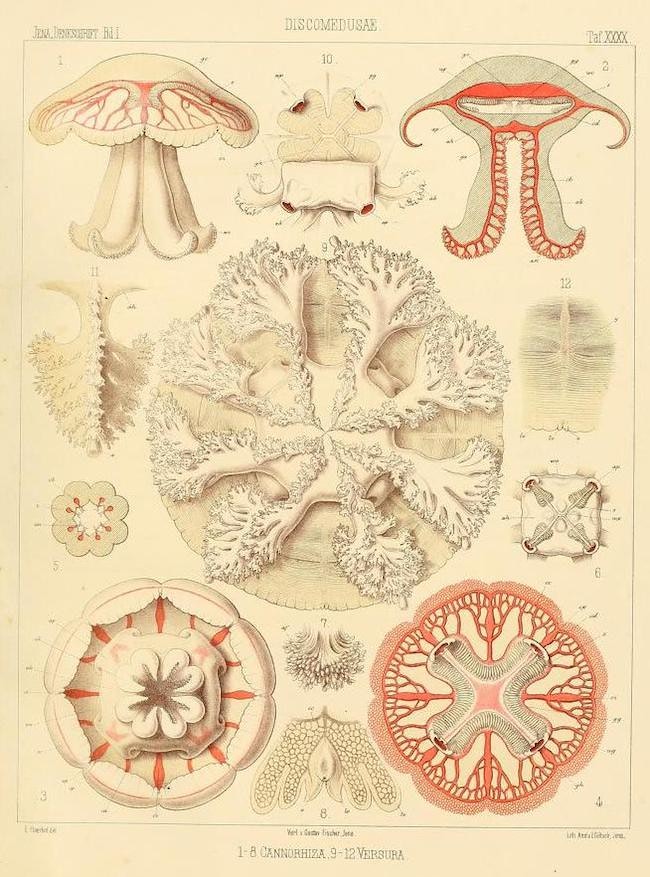
Haeckel’s grief led him to a period of intense work, ultimately producing significant scientific works, including a two-volume monograph on evolution and morphology. His fascination with medusae continued, and he named new species, including Desmonema annasethe, after Anna. Haeckel’s System of Medusae (1879–81) became one of his most renowned works, and his illustrations of jellyfish became iconic, featuring in his later book Art Forms in Nature.
In addition to his scientific and artistic achievements, Haeckel held controversial views on race and eugenics, which are discussed in critical essays.
Gallery
Artworks & Descriptions
Ernst Haeckel, a German biologist, was captivated by medusae (jellyfish), seeing in them the fragile yet exuberant beauty of nature. His fascination with these creatures deepened after the tragic death of his fiancée, Anna Sethe, in 1862. Haeckel, devastated by her passing, found solace in the grace of a medusa he observed in a rock pool during a trip to Nice. He named it Mitrocoma Annae in her memory.
Haeckel’s grief led him to a period of intense work, ultimately producing significant scientific works, including a two-volume monograph on evolution and morphology. His fascination with medusae continued, and he named new species, including Desmonema annasethe, after Anna. Haeckel’s System of Medusae (1879–81) became one of his most renowned works, and his illustrations of jellyfish became iconic, featuring in his later book Art Forms in Nature.
In addition to his scientific and artistic achievements, Haeckel held controversial views on race and eugenics, which are discussed in critical essays.
Gallery
Artworks & Descriptions
Ernst Haeckel, a German biologist, was captivated by medusae (jellyfish), seeing in them the fragile yet exuberant beauty of nature. His fascination with these creatures deepened after the tragic death of his fiancée, Anna Sethe, in 1862. Haeckel, devastated by her passing, found solace in the grace of a medusa he observed in a rock pool during a trip to Nice. He named it Mitrocoma Annae in her memory.
Haeckel’s grief led him to a period of intense work, ultimately producing significant scientific works, including a two-volume monograph on evolution and morphology. His fascination with medusae continued, and he named new species, including Desmonema annasethe, after Anna. Haeckel’s System of Medusae (1879–81) became one of his most renowned works, and his illustrations of jellyfish became iconic, featuring in his later book Art Forms in Nature.
In addition to his scientific and artistic achievements, Haeckel held controversial views on race and eugenics, which are discussed in critical essays.
Gallery