Optics Illustrations
Optics Illustrations
Artist
René Henri Digeon, M. Rapine
René Henri Digeon, M. Rapine
Date
March 16, 1882
March 16, 1882
Medium
Engravings
Engravings
Dimensions
22 × 28 cm
22 × 28 cm
Artworks & Descriptions
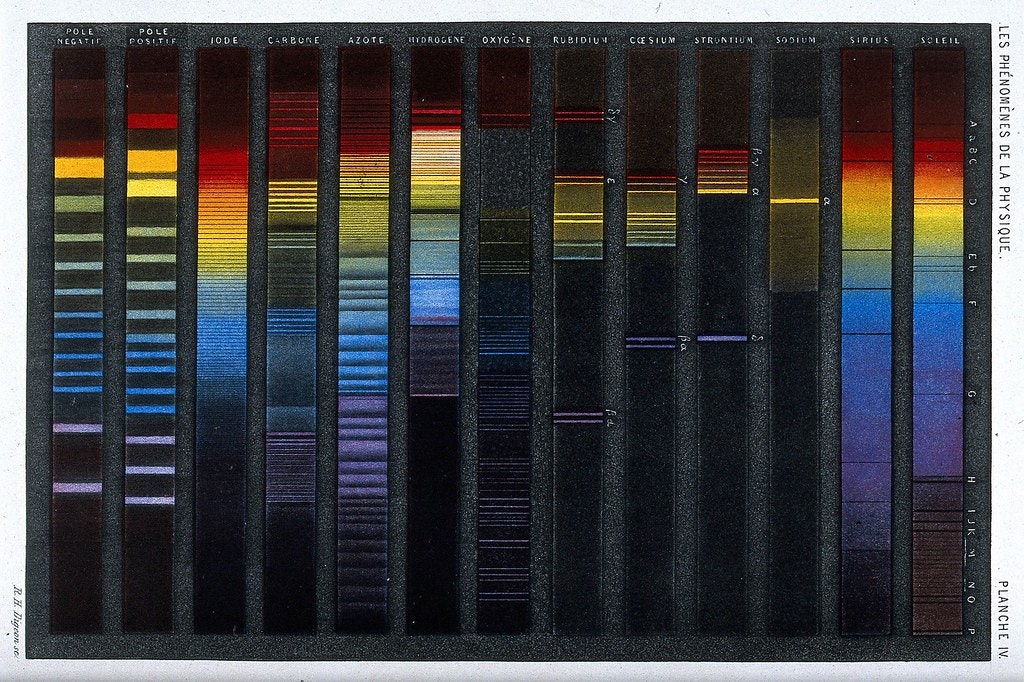
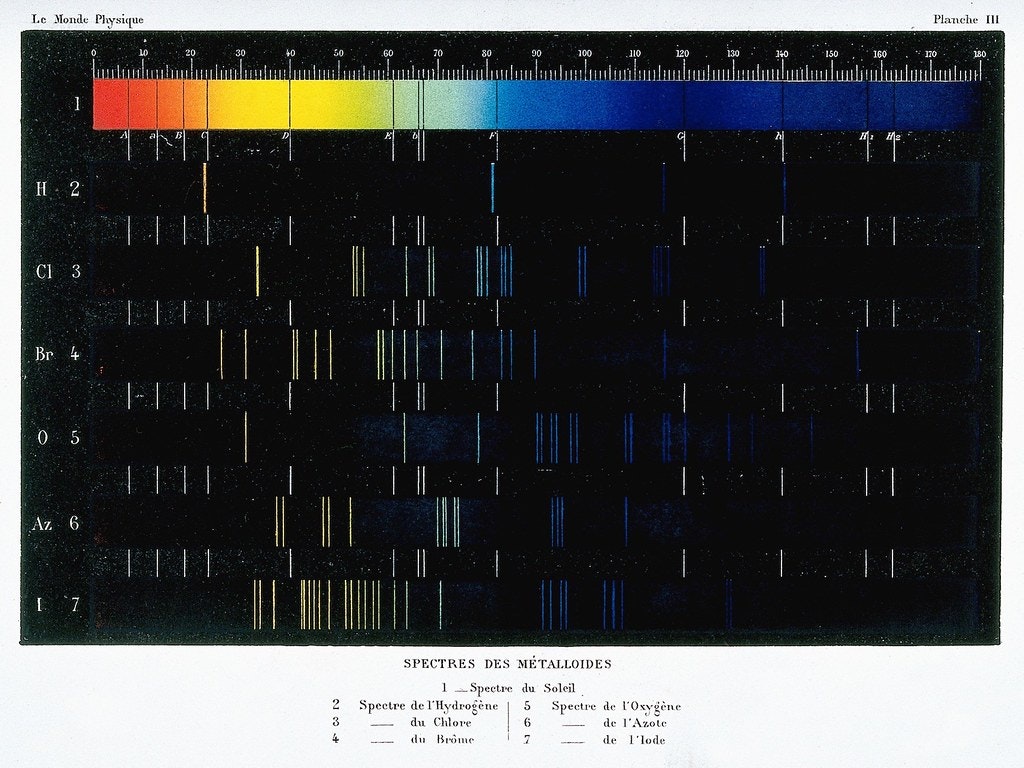
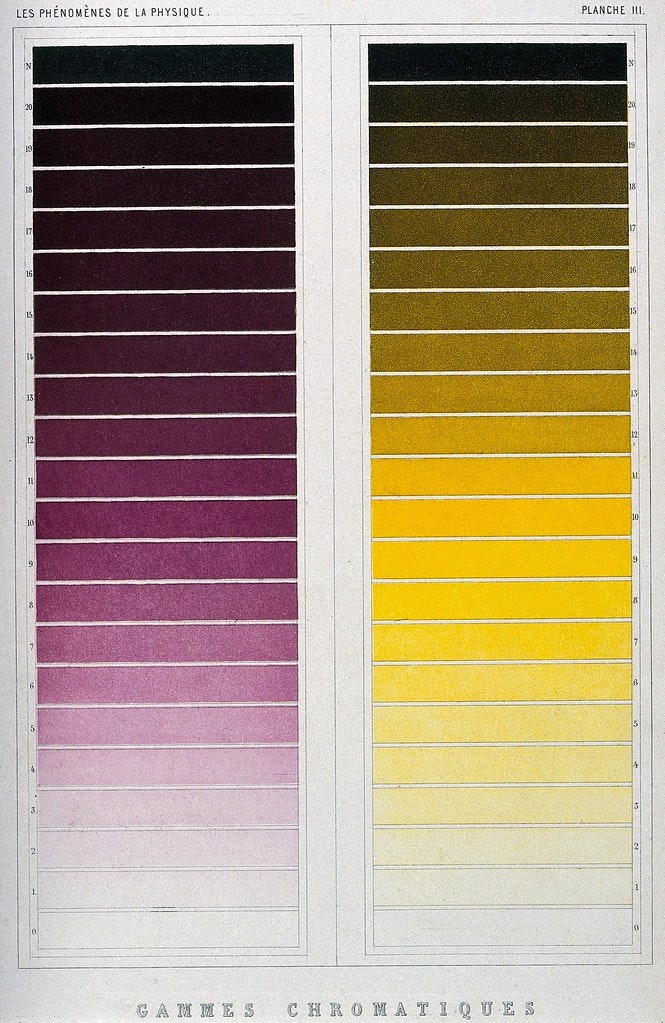
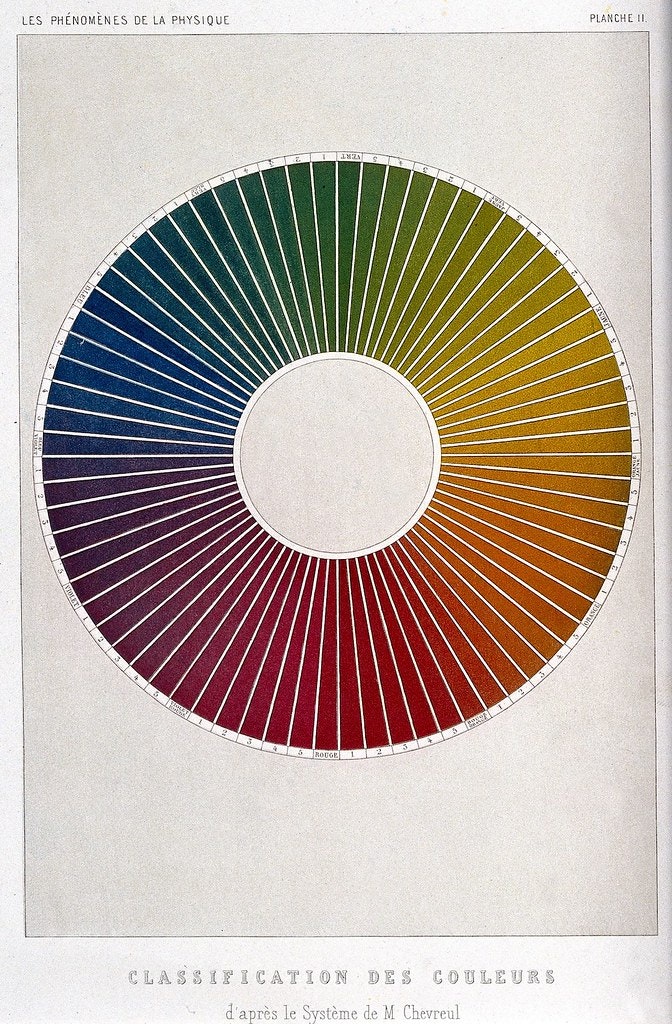
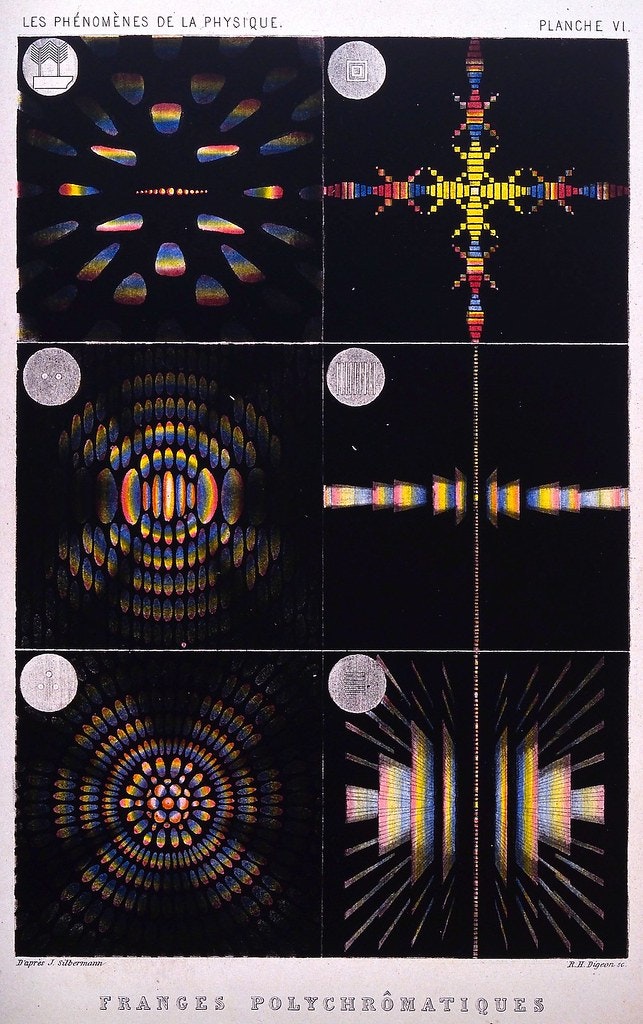
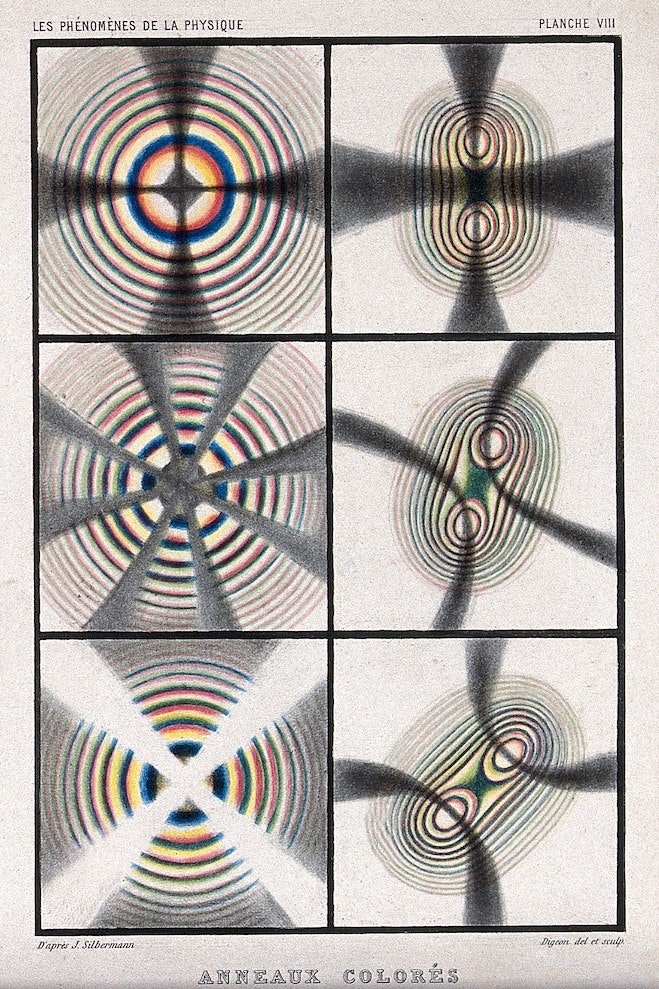
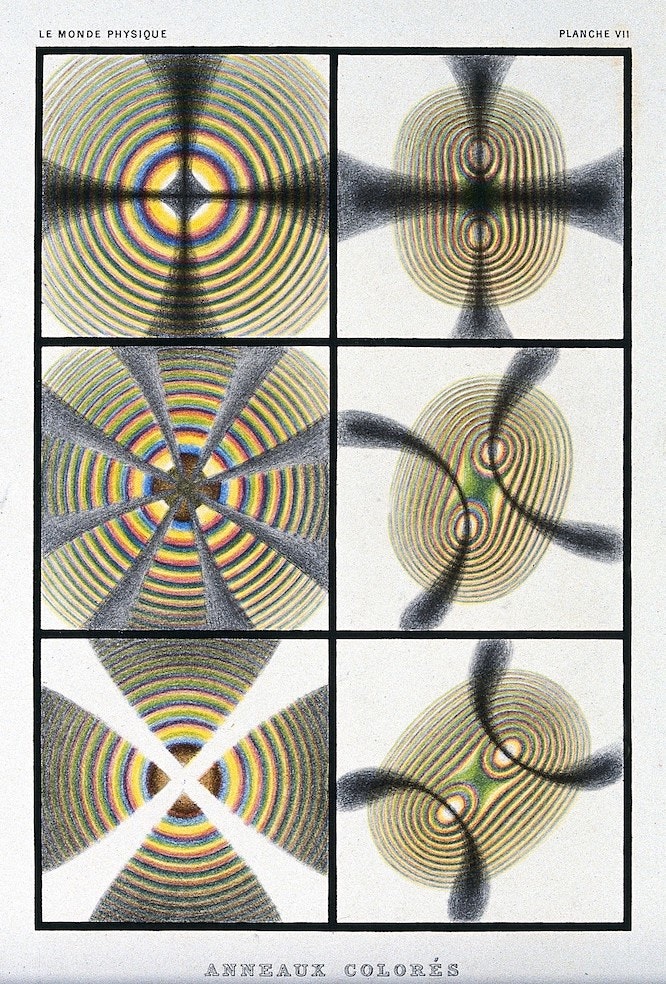
These illustrations, featured in Amédée Guillemin’s popular textbooks Les phénomènes de la physique (1868) and Le monde physique (1882), explore various aspects of optics. Many of the prints were created by Parisian engraver René Henri Digeon. Some of Digeon's more psychedelic illustrations are based on the work of physicist J. Silbermann, depicting light waves passing through various objects like a bird's feather and crystals mounted in tourmaline tongs.
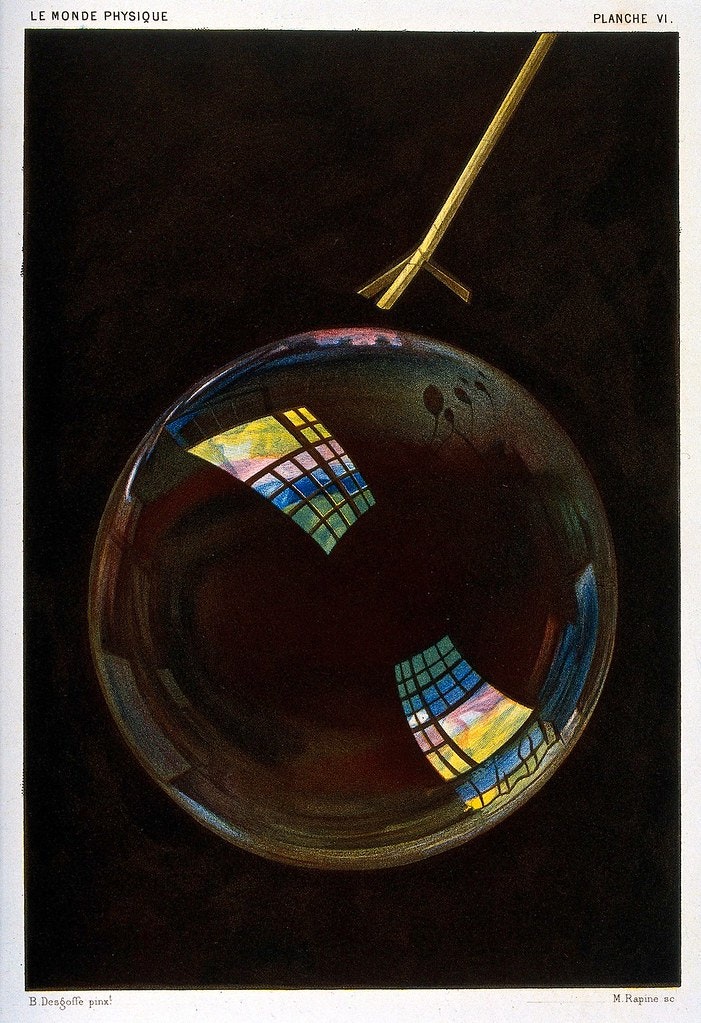
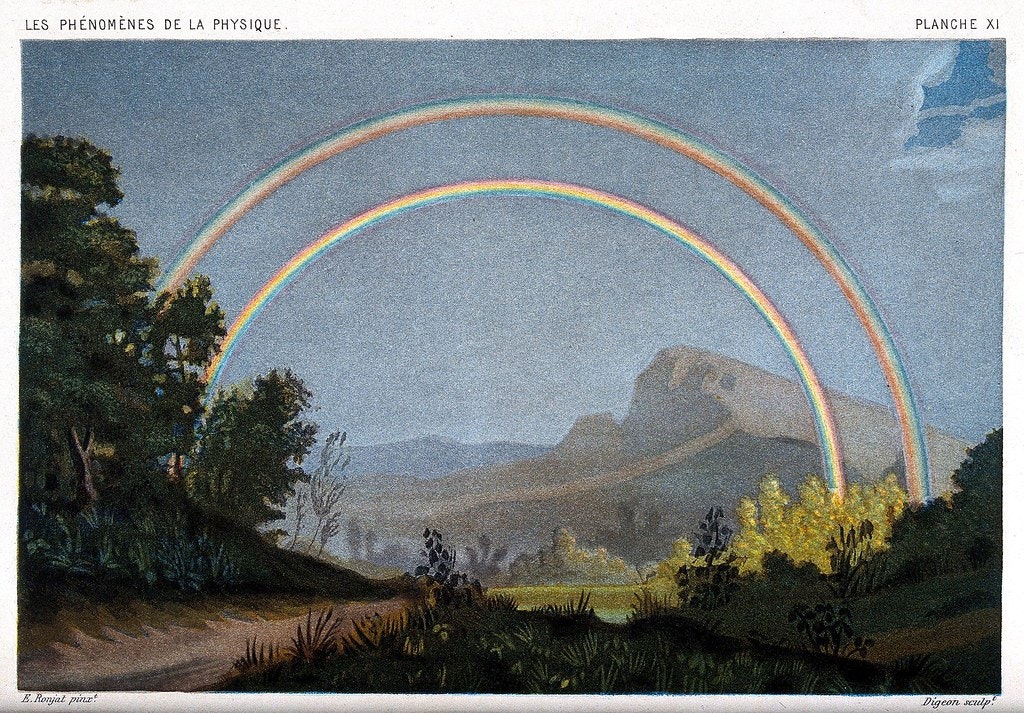
The images, including one by M. Rapine showing the effects of light on a soap bubble, were used to explain birefringence or double refraction, which is the colorful result of light moving through materials at different speeds. These subjects were carefully chosen, with Newton famously studying the iridescence of soap bubbles. His observations of refractive light helped him develop the undulatory theory of light, and he also noted the interesting effects of looking at the sun through a feather or black ribbon, observing multiple rainbows.
Gallery
Artworks & Descriptions
These illustrations, featured in Amédée Guillemin’s popular textbooks Les phénomènes de la physique (1868) and Le monde physique (1882), explore various aspects of optics. Many of the prints were created by Parisian engraver René Henri Digeon. Some of Digeon's more psychedelic illustrations are based on the work of physicist J. Silbermann, depicting light waves passing through various objects like a bird's feather and crystals mounted in tourmaline tongs.
The images, including one by M. Rapine showing the effects of light on a soap bubble, were used to explain birefringence or double refraction, which is the colorful result of light moving through materials at different speeds. These subjects were carefully chosen, with Newton famously studying the iridescence of soap bubbles. His observations of refractive light helped him develop the undulatory theory of light, and he also noted the interesting effects of looking at the sun through a feather or black ribbon, observing multiple rainbows.
Gallery
Artworks & Descriptions
These illustrations, featured in Amédée Guillemin’s popular textbooks Les phénomènes de la physique (1868) and Le monde physique (1882), explore various aspects of optics. Many of the prints were created by Parisian engraver René Henri Digeon. Some of Digeon's more psychedelic illustrations are based on the work of physicist J. Silbermann, depicting light waves passing through various objects like a bird's feather and crystals mounted in tourmaline tongs.
The images, including one by M. Rapine showing the effects of light on a soap bubble, were used to explain birefringence or double refraction, which is the colorful result of light moving through materials at different speeds. These subjects were carefully chosen, with Newton famously studying the iridescence of soap bubbles. His observations of refractive light helped him develop the undulatory theory of light, and he also noted the interesting effects of looking at the sun through a feather or black ribbon, observing multiple rainbows.
Gallery