The Maps of Matrakçı Nasuh
The Maps of Matrakçı Nasuh
Artist
Matrakçı Nasuh
Matrakçı Nasuh
Date
February 23, 1555
February 23, 1555
Medium
Ink, watercolor, and gold on paper
Ink, watercolor, and gold on paper
Dimensions
34 × 24 cm
34 × 24 cm
Artworks & Descriptions
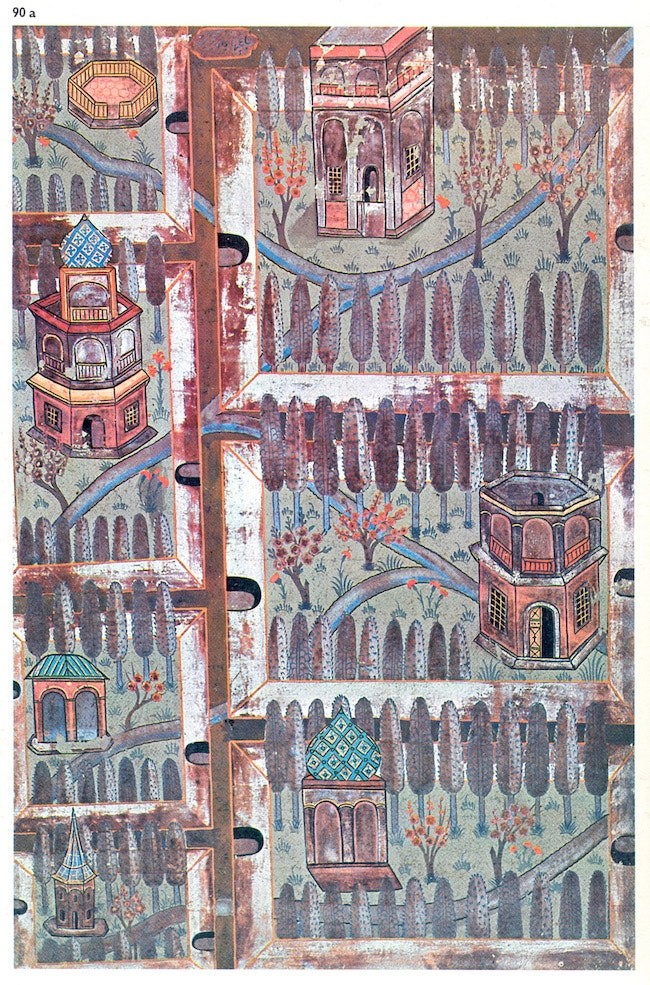
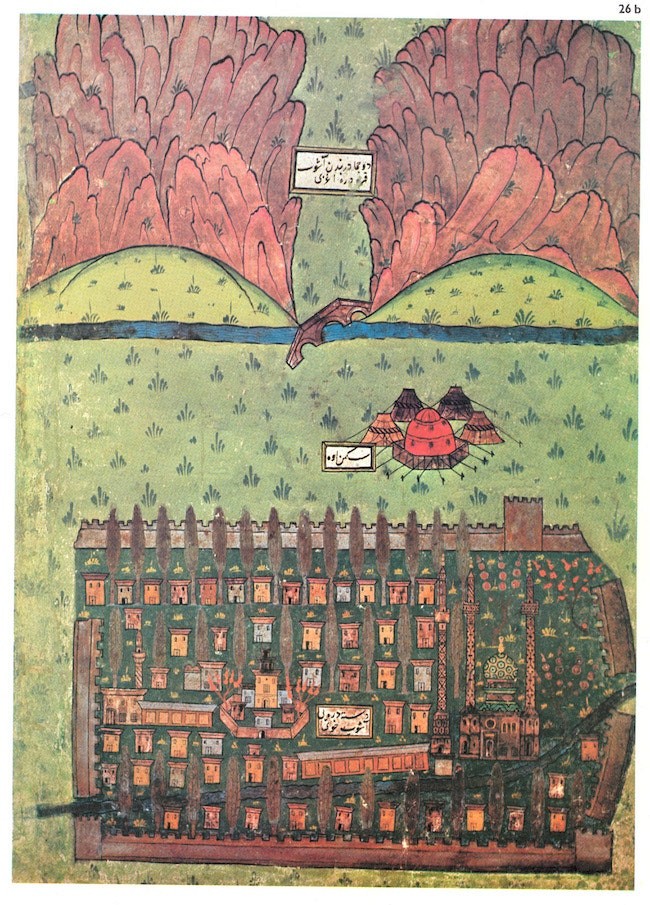
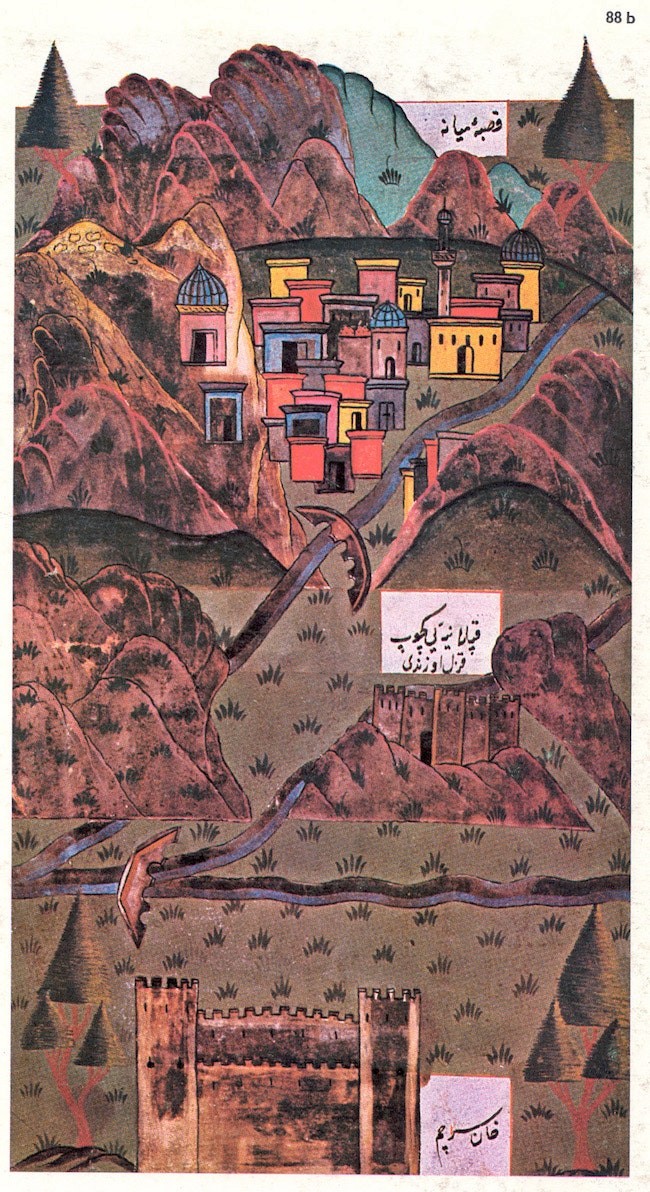
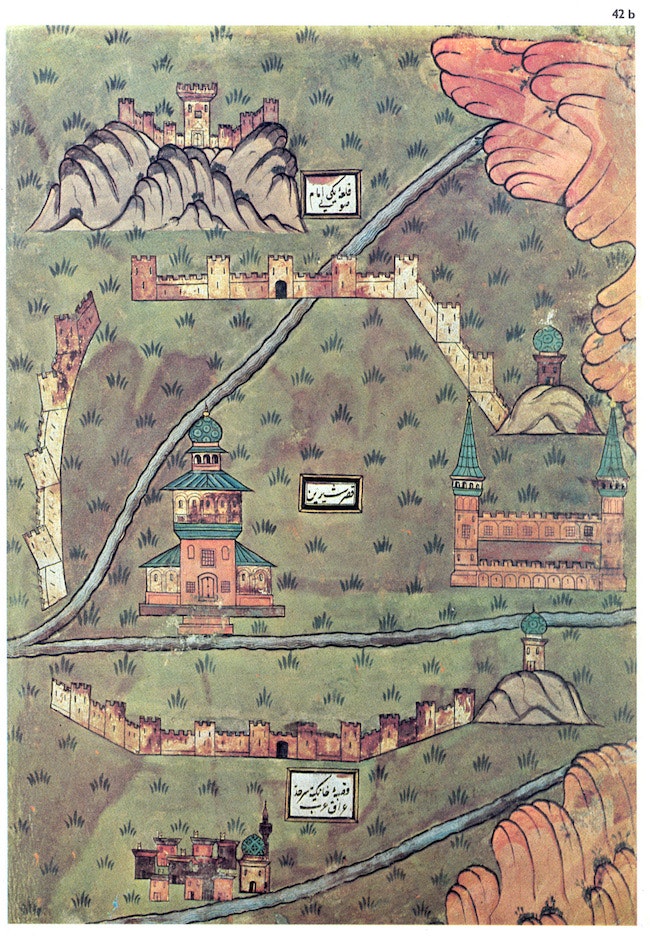
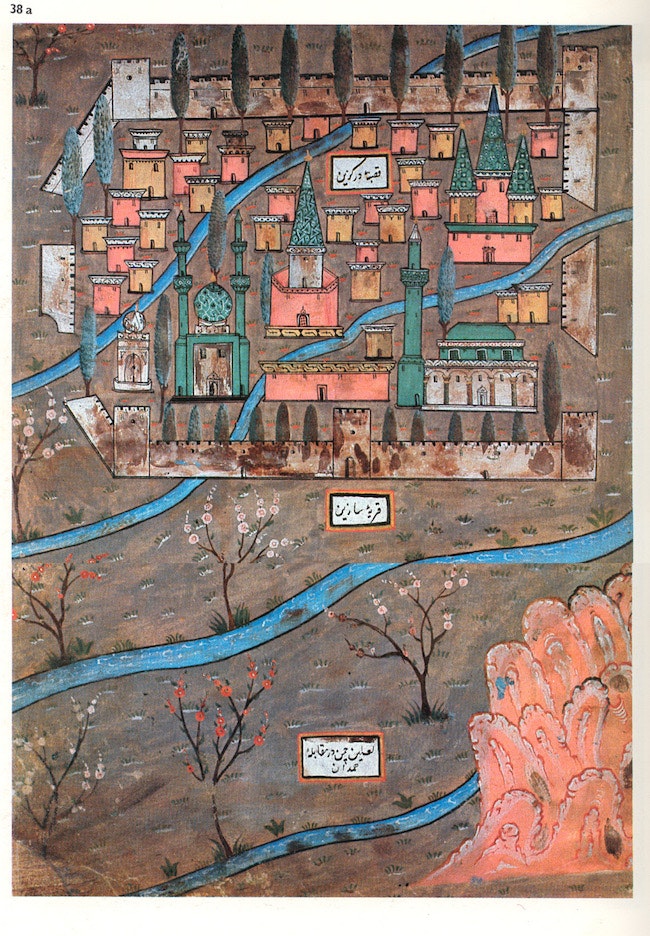
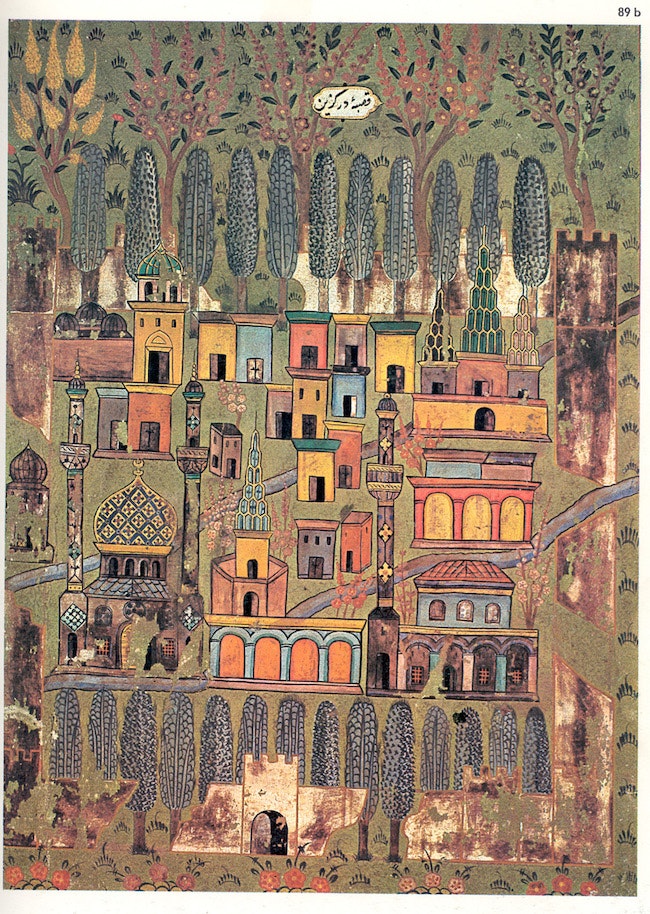
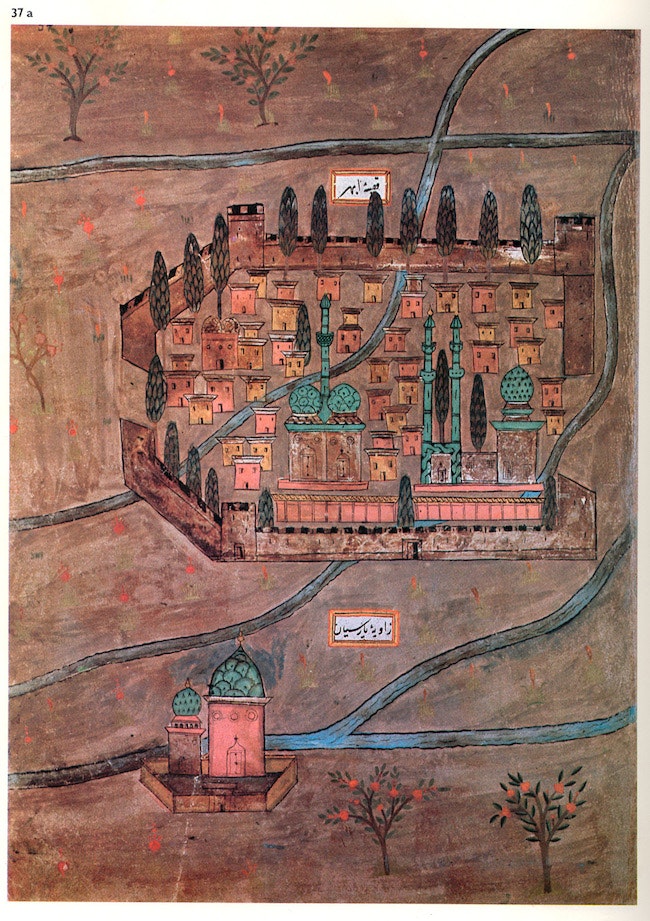
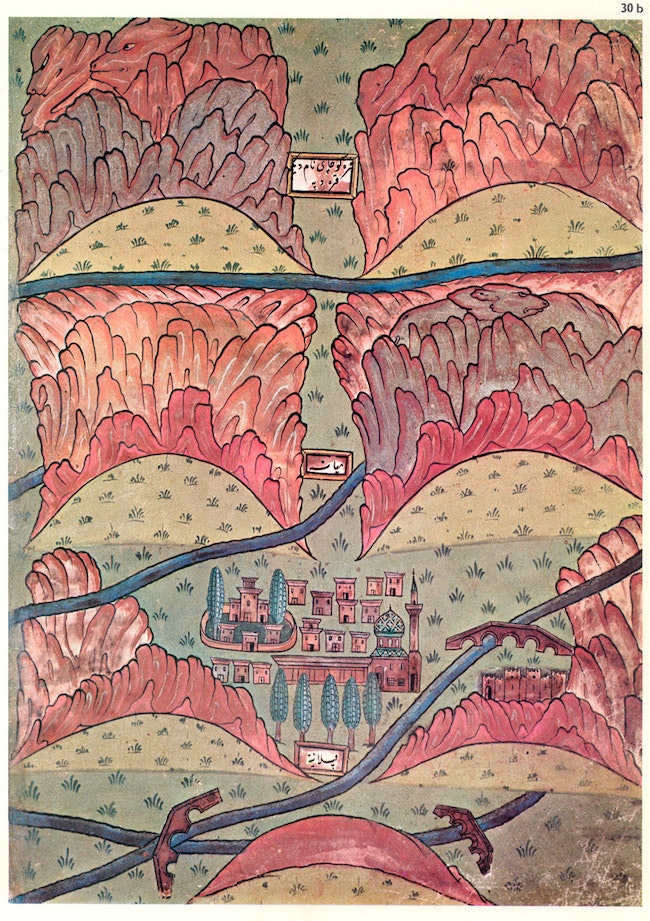
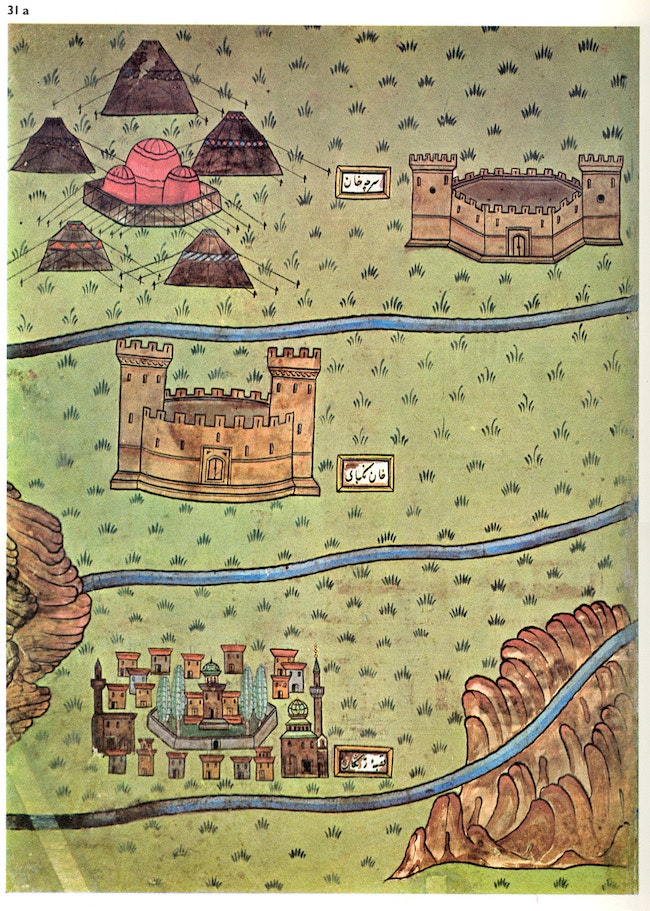
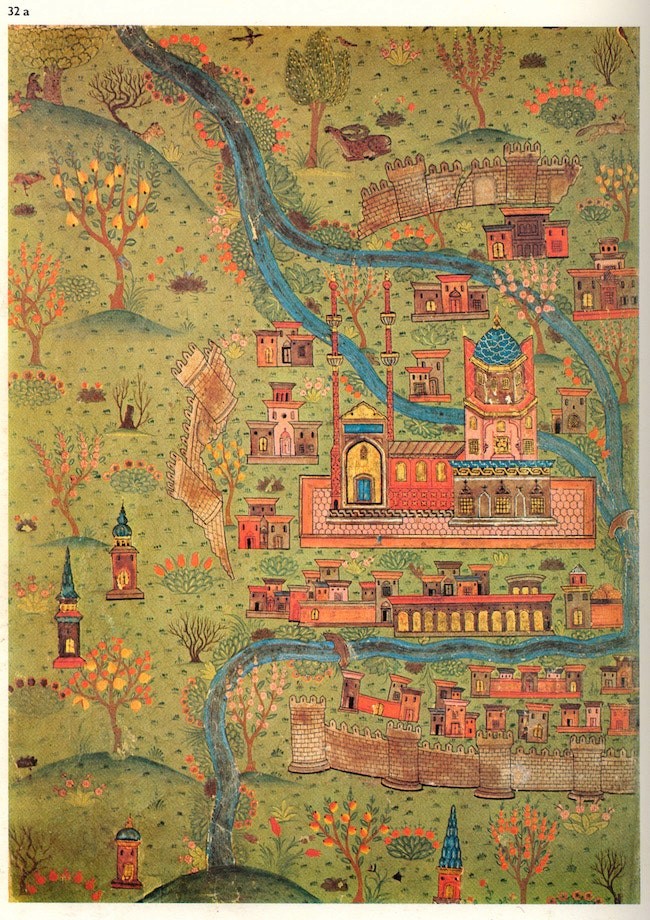
Matrakçı Nasuh, a Bosnian-born polymath, is renowned for his contributions to both mathematics and history, as well as for his stunning miniatures depicting 16th-century Persian landscapes and urban centers. His most important work, Fetihname-i Karabuğdan, is housed at the Istanbul University Library and chronicles Suleiman the Magnificent's Safavid War (1532–1555). In this work, Matrakçı Nasuh illustrates the cities the Ottoman army passed through, from Istanbul to Baghdad, Tabriz, Halab, and Eskisehir.
The name "Matrakçı" was a nickname derived from his invention of a military game called "matrak," which involved the use of a cudgel or mace. This nickname eventually became associated with a unique style in Ottoman miniature art, the "Matrakçı style," characterized by meticulous detail and precision. One of the most iconic examples of this style is his famous 1536 depiction of Istanbul.
Gallery

Artworks & Descriptions
Matrakçı Nasuh, a Bosnian-born polymath, is renowned for his contributions to both mathematics and history, as well as for his stunning miniatures depicting 16th-century Persian landscapes and urban centers. His most important work, Fetihname-i Karabuğdan, is housed at the Istanbul University Library and chronicles Suleiman the Magnificent's Safavid War (1532–1555). In this work, Matrakçı Nasuh illustrates the cities the Ottoman army passed through, from Istanbul to Baghdad, Tabriz, Halab, and Eskisehir.
The name "Matrakçı" was a nickname derived from his invention of a military game called "matrak," which involved the use of a cudgel or mace. This nickname eventually became associated with a unique style in Ottoman miniature art, the "Matrakçı style," characterized by meticulous detail and precision. One of the most iconic examples of this style is his famous 1536 depiction of Istanbul.
Gallery
Artworks & Descriptions
Matrakçı Nasuh, a Bosnian-born polymath, is renowned for his contributions to both mathematics and history, as well as for his stunning miniatures depicting 16th-century Persian landscapes and urban centers. His most important work, Fetihname-i Karabuğdan, is housed at the Istanbul University Library and chronicles Suleiman the Magnificent's Safavid War (1532–1555). In this work, Matrakçı Nasuh illustrates the cities the Ottoman army passed through, from Istanbul to Baghdad, Tabriz, Halab, and Eskisehir.
The name "Matrakçı" was a nickname derived from his invention of a military game called "matrak," which involved the use of a cudgel or mace. This nickname eventually became associated with a unique style in Ottoman miniature art, the "Matrakçı style," characterized by meticulous detail and precision. One of the most iconic examples of this style is his famous 1536 depiction of Istanbul.
Gallery